

For decades, medication in the U.S. has reached historical highs, a concern on many American citizens’ minds, especially those who are a part of the Medicaid program, the largest joint state and federal program, primarily for low-income individuals and families.
On September 30, 2025, President Donald Trump and Pfizer CEO Albert Bourla announced their agreement to cut down the costs of all Pfizer prescription drugs to the Most Favored Nation (MFN) pricing for every United States state Medicaid program–a development that many hope will drive other companies to follow suit.
Trump and the U.S. Health and Human Services’ (headed by RFK Jr.) deal with Pfizer did not happen randomly. On July 31st, in light of an executive order issued in May 2025, Trump had issued letters to 17 major drug companies, demanding action by September 29th – implementing a strict 60-day deadline. In these letters, Trump threatened these pharmaceutical companies that if they did not lower their full portfolio of drugs for Medicaid recipients to prices of other high-income countries (33 of which are about 2.78 times lower on average, based on a 2024 report by the RAND Corporation), the federal government “will deploy every tool in [their] arsenal to protect American families from continued abusive drug pricing practices,” which includes but is not limited to 100% tariffs (recently extended to 250%) on imported medication to companies, excluding companies that already have, or are building manufacturing plants in the U.S.
Mr. Henríquez, a Monte Vista teacher, provides his hopes and concerns for these deals.
“Part of me is happy that something like this happened… I feel like medicine should be cheaper no matter what,” said Henríquez. “I know that just an EpiPen is hundreds of dollars, but you go to Canada, and you go to Europe, and it’s cheap. So I’m hoping these things that the White House is doing do end up helping Americans, and I hope more companies, if what they’re saying is true and this deal does work out, sign onto this. So I’m optimistic, but we’ll see what happens.”
So what steps will Pfizer be taking? According to their agreement, in exchange for a three-year exemption from new tariffs, Pfizer is taking multiple steps: selling some primary care and specialty drugs at a discounted price direct to consumers via the Trumprx.gov website, a federal website planning to allow uninsured Americans access to pre-negotiated discounted medication prices starting in 2026; investing $70 billion to research, development, and manufacturing facilities in the U.S.; and offering newly released drugs at the MFN pricing. Such steps will not only lead to the increased affordability of Pfizer medication but will also contribute to building a stronger American economy.
Because this deal is targeted at Medicaid users, approximately 70.5 million people in the U.S. will be able to access these deals. These users include those in need of long-term care, low-income families/individuals, and people with disabilities. This means that Americans who already have health insurance will generally not see any difference.
Examples of the drugs for which prices will be changing include Eucrisa, Xeljanz, and Zavzpret, a topical ointment for atopic dermatitis, an oral medication for specific arthritis and colitis, and a treatment for migraines, respectively.
As big pharma companies are now expected to face 100% to 250% tariffs, the pressure to follow Pfizer’s lead is already causing such companies to scramble for a deal of their own. Recently, on October 10, 2025,
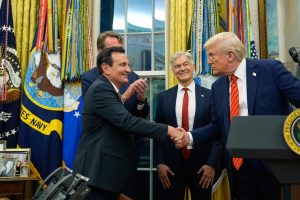
Pascal Soriot, the CEO of AstraZeneca, a science-led biopharmaceutical company based in the U.K. that has a different portfolio of medications for those with asthma and chronic obstructive pulmonary disease, made a deal with Trump, closely resembling the deal made previously with Pfizer. The company will now sell its drugs at the same MFN prices and will be exempt from pharmaceutical tariffs if it maintains investments in U.S. manufacturing, according to Soriot. In fact, AstraZeneca has already announced that it will invest $50 billion in U.S. manufacturing, research, and development by 2030, on top of building a new facility in Charlottesville, Virginia.
President Trump has mentioned his aim to make more deals with pharmaceutical companies in the near future–a testament to his ongoing effort to decrease the unreasonably steep medication prices in the U.S. The fight for affordable healthcare in the U.S. is shaping a new hope for Medicaid users.