
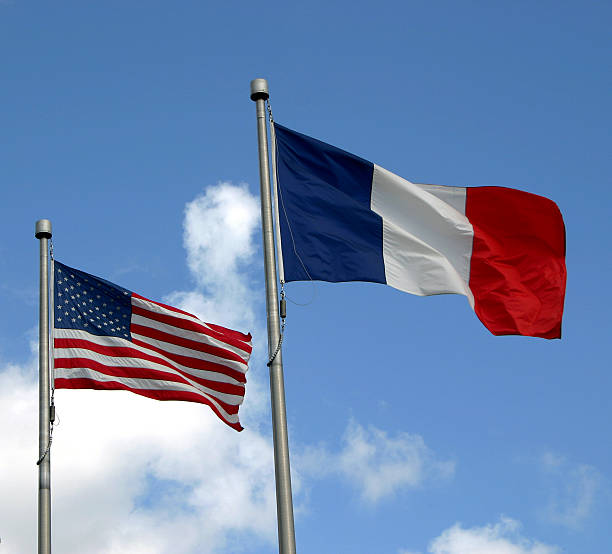
On a normal day, one like any other, you turn on the television. You watch the sports coverage from yesterday’s game, but almost immediately, it’s switched to something else. A reporter, quivering, unable to speak. He starts. “There are.. confirmed.. reports of a nuclear attack on the United States.” You turn it off. It doesn’t matter who, or what, started it, but now it’s real. Outside, the sirens start to blast, and suddenly, you wake up. All a nightmare. But you realize, this could really happen. On February 4th, 2026, New START, the main nuclear weapons treaty between the United States and Russia, expired. But what we can take from this unfortunate event is that while the last bastion against the horrors of a new nuclear arms race is gone, our leaders can create a better, more lasting deal.
New START was signed on the 8th of April, 2010, and in that era, the power balance was in the United States’ favor. President Barack Obama, presiding over a liberal administration, drafted New START with Dmitri Medvedev in Prague. The signing represented a continued emphasis on reducing arms and giving nuclear security to both states. New START was a continuation of the original START treaties, STARTs 1 and 2. START 1 was the major nuclear treaty before New START was signed, and START 2 was a failed attempt at a second treaty in 1993. Instead of START 2, the SORT treaty went into effect, though this deal was not as far-reaching as START 2.
Over time, the treaties became more and more effective in reducing nuclear weapons and delivery systems. New START reduced its predecessor, which was built on the one before that, and so on. Effectively, the treaty limits the states to around 700 deployed ICBMs, submarine-launched ballistic missiles (SLBMs), and deployed heavy bombers; 1,550 Nuclear Warheads on deployed ICBMs, SLBMs, and heavy bombers; and 800 deployed and non-deployed ICBM and SLBM launchers (state.gov). In addition, the treaty provided for multiple bipartisan inspection units, so that the states may comply with it.
When the treaty ended, the presidents of both countries made different statements regarding the end of the deal. Russia, through its Foreign Minister Sergei Lavrov, said the deal will “remain as long as the US doesn’t exceed these limits” (PBS), while Trump said on social media, “we should have our Nuclear Experts (sic) work on a new, improved and modernized Treaty.” (Brookings). What these statements don’t do is concretely set a plan in place for future treaties, though they continue on the shared intentions.
“I think more robust verification of limited arms and testing (are needed), especially on the Russian side. It has to be baked into any new agreement,” said Mr. Rossi. (The end of New START) potentially resets who’s going to be the greater nuclear superpower. Russia needs this capability, and I think they are going to ramp it up.
What needs to happen, in this reporter’s opinion, is that both states need to take into account that we live in a changing world. The United States is slowly, but surely, falling on the world stage, especially with Trump’s unpredictability. He did remark that the next deal should include China in the next deal, but saying something is different from actually doing something. At present, nothing has changed since the deal ended. Grounds for a new deal are yet to be in place. So while there is a lull, let’s come up with something more beneficial to everyone.
I am not a professional, so maybe take this with a grain of salt. But what could be potentially added, as the US’s leader said, is an agreement with more nations. This would make it so that other nuclear powers would be under the same amount of scrutiny that the US and Russian governments are under. Specifically, calls for China and the UK to join the agreement are the most common from politicians and think tanks around the world. Second, why not decrease the number of weapons allowed in all? Each number should at least go down by 100, as 3,100 weapons and delivery systems in all is still too much. The least amount to enforce the so-called “nuclear deterrence doctrine” should be, as stated before, the least possible.
“I bet there will be an attempt to add other countries, some of whom have actually signed the nuclear nonproliferation treaty, á la Iran,” Mr. Rossi continued. “They could go to the P5 + 1 model that they did with the Iran nuclear deal.” The P5 + 1 includes every permanent member on the UN security council (France, China, UK, Russia, and the US) and adds Germany on the side.
On top of these already high numbers, there is limited diplomatic dialogue. To remedy this, there could possibly be more meetings lined out for each year in the treaty. These meetings would be between the two countries to plan out their productions and active weapon numbers for the following year. Limiting tensions would also be a part of this section of the deal. It could possibly line up a neutral nation to mediate on issues, so that any disagreements could be remedied through this power.
“If the most powerful weapons ever created are ever unleashed, they will be fired not in anger… but fear.” In the grand scheme of things, it could not be more fitting that a fictional president, J. Robert Fowler, from The Sum of all Fears, might say something so true. What the world needs to realize, according to Fowler, is that the risk of nuclear war increases, not decreases, from nuclear brinkmanship. In this new age, globalization makes that risk even higher than it might have been in the times of the Cold War. This is why we need a new treaty. As Mr. Rossi said, “When countries don’t agree to limit weapons of mass destruction, it’s always going to be bad.”